D K Printworld
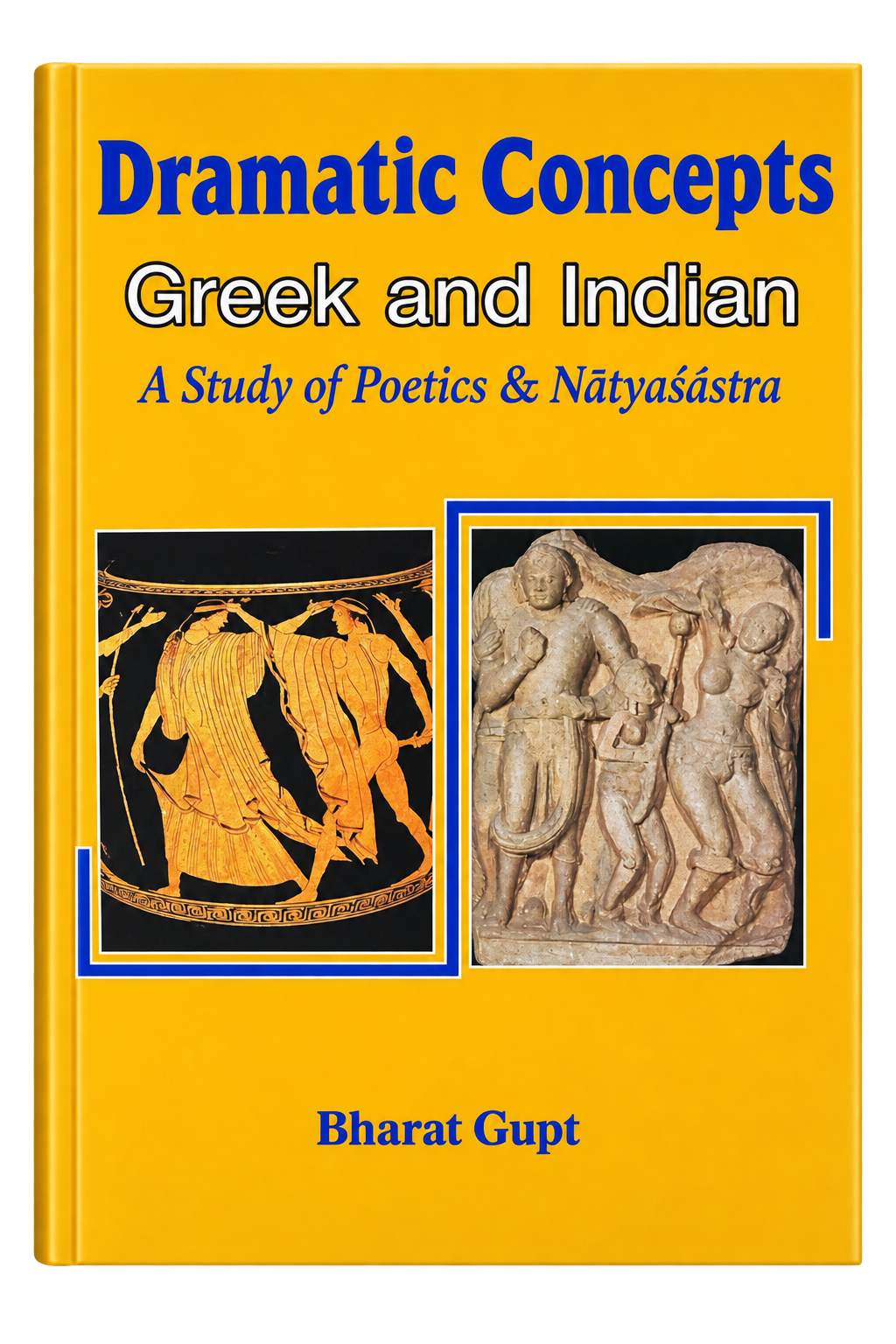
Dramatic Concepts - Greek and Indian — A Study of the Poetics and the Nāṭyaśāstra
Dramatic Concepts - Greek and Indian — A Study of the Poetics and the Nāṭyaśāstra
Couldn't load pickup availability
Title: Dramatic Concepts: Greek and Indian — A Study of the Poetics and the Nāṭyaśāstra
Author: Bharat Gupt
Publisher: D. K. Printworld
Place of Publication: New Delhi
Publication History: First published in 1994; reprinted in 1996; Third Impression, 2006
Year of This Edition: 2006
Language: English, with Sanskrit and Greek technical terminology
Binding: Hardcover
Pages: xvii + 295
Bibliographical Features: Bibliography and index
Size: 23 cm
ISBN/UPC (if available): 81-246-0025-2
Description
Dramatic Concepts: Greek and Indian offers a comparative study of ancient Greek and Indian dramatic theory through Aristotle’s Poetics and Bharata Muni’s Nāṭyaśāstra. Rather than treating the two works simply as representatives of opposing Western and Eastern traditions, Bharat Gupt places them within the broader context of ancient Indo-European culture and the practice of sacred drama, or hieropraxis.
The study argues that ancient Greek and Indian drama belonged to theatrical cultures in which performance addressed both divine and human audiences. These traditions employed stylized gesture, dance, music, speech, and dialogue to create an ornate theatrical reality distinct from the predominantly secular and realistic conventions that later developed in European theatre.
The author compares the theoretical concepts formulated by Aristotle and Bharata Muni while also attempting to reconstruct important aspects of Greek and Indian performance practice. Subjects examined include ritual and festive performance, theatrical space, gesture and dance, music and speech, dramatic genres, plot and character, imitation, emotional transformation, and aesthetic experience.
Among the principal concepts discussed are mimesis and anukaraṇa, mythos and itivṛtta, melopoiia and gāna, katharsis and rasa, lokadharmī and nāṭyadharmī, the four forms of abhinaya, the daśarūpakas, and the interpretations of rasa associated with Lollaṭa, Śaṅkuka, Bhaṭṭa Nāyaka, and Abhinavagupta.
Combining comparative poetics, theatre history, performance theory, Sanskrit aesthetics, and classical studies, the book is a substantive scholarly resource for students and researchers in theatre and performance studies, comparative literature, Indology, Sanskrit studies, aesthetics, dance, music, and the history of religion.
About the Author
Bharat Gupt is a classicist, theatre theorist, musicologist, author, and scholar of Indian and Greek dramatic traditions. He studied at St. Stephen’s College, Delhi, and at the University of Toronto, and conducted his doctoral research at Maharaja Sayajirao University of Baroda. He received training in sitar and surbahar from Pandit Uma Shankar Mishra and studied musicology and classical traditions with Acharya K. C. D. Brihaspati.
Trained in both modern academic and traditional Indian systems of education, Bharat Gupt has taught English at the University of Delhi and has been associated with the National School of Drama. He also received a fellowship to work at the McLuhan Program at the University of Toronto. His research and publications encompass classical theatre, the Nāṭyaśāstra, music, aesthetics, literature, culture, and media studies.
Contents
Preface
Part I: Ancient Drama as Hieropraxis
Chapter One
Introduction
Ancient Drama as Hieropraxis
Unification of Speech, Gesture and Dance in Hieropraxis
Departure from Hieropraxis
Growth of European Drama as Word-Centred Performance
Christian Bias Against Transformation
Elimination of Dance and Music
Rise of Portraiture
Social Reformism
The Poetics and the Nāṭyaśāstra as Systems of Performance
Chapter Two
The Date of the Nāṭyaśāstra
The Sanskrit of the Nāṭyaśāstra
The Antiquity of the Daśarūpakas
Musical Instruments in the Nāṭyaśāstra
Gandharvas and Gāndharva
Pre-Epic Themes of Early Drama
The Nāṭyaśāstra and the Rāmāyaṇa
The Nāṭyaśāstra and the Mahābhārata
The Prose Passages in the Nāṭyaśāstra
The Nāṭyaśāstra as Antedating Kauṭilya, Vātsyāyana and the Amarakośa
The Nāṭyaśāstra as a Compilation
Bharata Muni, a Person and Not a “Tradition”
Later Growth of the Nāṭyaśāstra
Chapter Three
Indo-European Beliefs in Greek and Indian Drama
Miasma-Katharsis or Śauca-Aśauca
The Gift of Vitality
Ancestor Worship and Burial Customs
Protection of the Supplicant
The Power of the Oath
Oracles and Curses
Some Other Common Beliefs
Chapter Four
Drama as Festive Ritual
Drama and Ritual
The Nucleus of Dance in Greek Theatre
Audience Participation
Origin of Indian Drama
Indian Festive Setting
Community Involvement
Part II: Concepts and Techniques
Chapter Five
Basic Concepts of Aristotle and Bharata Muni: A Reassessment
Chapter Six
Theory of Imitation
The Concept of Anukaraṇa
Chapter Seven
Medium of Imitation
Rhythm, Language and Harmony
The Indian Medium of Anukaraṇa
Abhinaya of Four Kinds
Āṅgika Abhinaya
Head Movements
Hand Postures
Breast, Belly and Leg Movements
Leg Postures or Cārī
Gatipracāra or Gait
Verbal Abhinaya
Sāttvika Abhinaya
Āhārya Abhinaya
Kinds of Āhārya
The Unification of the Four Abhinayas or Samānikaraṇa
Chapter Eight
A Comparison of Greek and Indian Theatrical Space
Hieropraxic Division of Space
The Greek Performance Space
The Effect of the Mask on Theatron Size
The Indian Performance Space
Space for Musical Activity
Dance Space
Division of Acting Area, or Kakṣyā Vibhāga
Open Theatres
Chapter Nine
The Visual Content
Greek Gesture and Dance
Orchestral Activity
Greek Choreology
Greek Dance Genres
Theatrical Dances
Unification of Dance with Words
Visual Content in Indian Drama
Chapter Ten
The Aural Content
Lexis
Rhythm and Tone
Melopoiia: The Greek Musical System
Application in Theatre
The Vāgabhinaya Concept
Pāṭhya
Prose-Verse Dialogue in Indian Drama
Elements of Dialogue or Pāṭhya
Gāna or Dhruvā Songs
Gāndharva
Dianoia
Chapter Eleven
Dramatic Genres and Play Structures
The Serious and the Trivial
Daśarūpakas
The Four Vṛttis
Significance of the Daśarūpakas
Play Structure
Itivṛtta
Ethos and Nāyakas
Ethos
Nāyakas and Nāyikās
Part III: Transformation and Emotional Arousal
Chapter Twelve
Transformation and Emotional Arousal
Transformation of Reality
Lokadharmī and Nāṭyadharmī
Transformation for Emotional Arousal
Emotional Arousal in Greek Theory
Indian System of Emotional Arousal
Vibhāvas and Anubhāvas
Katharsis and Hēdonē
The Rasa Concept
Lollaṭa’s Analysis
Śaṅkuka’s Analysis
Bhaṭṭa Nāyaka’s Analysis
Abhinavagupta’s Analysis
Saṃyuktivāda
Katharsis and Rasa
Epilogue
Bibliography
Index
Share